
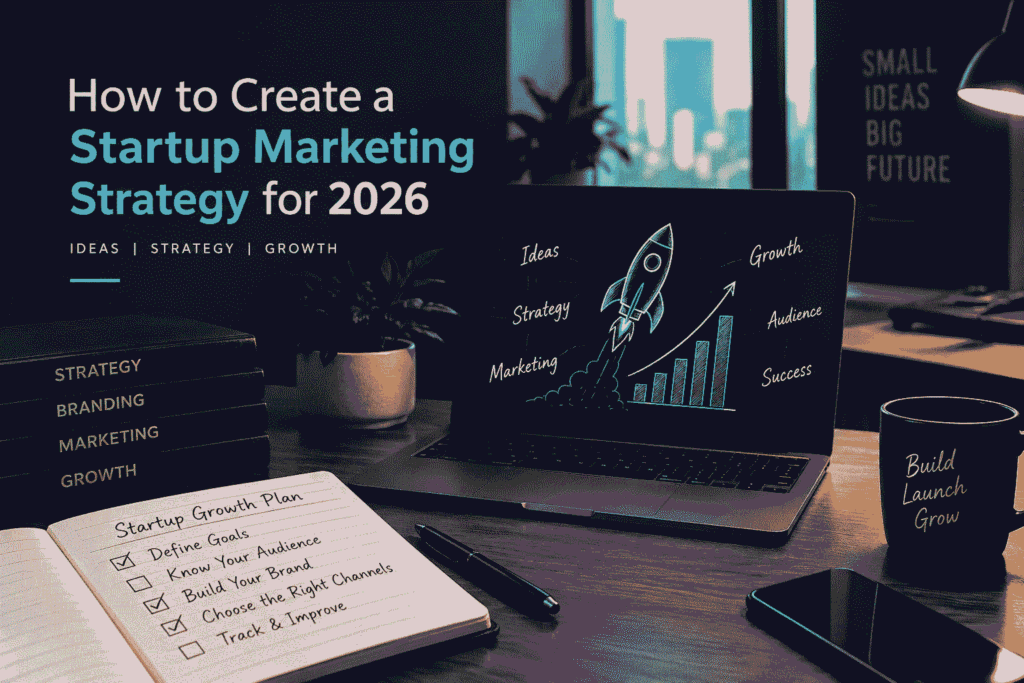
How to Create a Startup Marketing Strategy for 2026
Starting a new business is exciting, but building a great product is only one part of the journey. A startup also needs a clear way to reach the right audience, communicate its value, generate leads, and turn potential customers into loyal customers. This is where a strong startup marketing strategy becomes important. In 2026, startups have access to more digital marketing channels and technologies than ever before. Search engines, social media, content marketing, email marketing, paid advertising, analytics, and artificial intelligence can all contribute to business growth. However, using every channel at the same time is not necessarily the best approach. A well-planned startup marketing strategy helps businesses focus their resources on the channels that matter most. A successful startup needs to understand its audience, choose the right channels, create useful content, measure results, and continuously improve its strategy. A clear startup marketing strategy brings these activities together into an organized marketing process. What Is a Startup Marketing Strategy? A startup marketing strategy is a structured plan that explains how a new business will reach its target customers and achieve its marketing goals. It normally includes: For startups, the strategy should focus on achieving measurable results with limited resources. Instead of spending money across every available platform, businesses should identify where their potential customers are most active and concentrate their efforts there. This makes the startup marketing strategy more focused and efficient. 1. Define Your Target Audience The first step in creating a startup marketing strategy is understanding who you want to reach. A startup cannot effectively market to everyone. Define your ideal customer based on factors such as: Create an ideal customer profile and identify the specific problem your product or service solves. For example, a startup selling productivity software could target small-business owners who struggle with managing tasks, employees, and deadlines. Understanding your audience makes your digital marketing for startups more focused and relevant. It also helps ensure that your startup marketing strategy speaks directly to the people most likely to become customers. 2. Research Your Competitors Competitor research helps you understand what is already working in your market. Look at competitors’: Do not simply copy competitors. Instead, identify gaps and opportunities. Ask questions such as: What are competitors doing well? What complaints do customers have? What topics are competitors not covering? How can your startup communicate its value differently? This information can help you develop a stronger marketing strategy for startups and make your startup marketing strategy more distinctive. 3. Set SMART Marketing Goals Your marketing strategy should have clear objectives. Instead of saying: “We want more customers.” Create a measurable goal such as: “Generate 500 qualified website visitors and 50 leads within three months.” SMART goals are: Your goals might include increasing website traffic, generating leads, improving conversions, increasing brand awareness, or acquiring new customers. Clear goals also make it easier to measure the performance of your startup marketing plan. Your startup marketing strategy should connect each marketing activity to a specific business objective. 4. Build a Strong Brand Identity A startup needs more than a logo. Your brand should communicate what your company stands for and why customers should choose you. Develop: Your value proposition should clearly explain what you offer, who you serve, and why your solution is useful. Consistent branding across your website, social media, advertisements, and other channels can help build startup brand awareness. A consistent identity also makes your startup marketing strategy easier for customers to recognize across different platforms. 5. Create a Startup SEO Strategy SEO can be one of the most valuable long-term marketing channels for a startup. A startup SEO strategy should begin with keyword research. Identify keywords your target audience uses when searching for information, products, or services related to your business. Focus on: For example, a startup selling accounting software could create content around topics such as accounting software for small businesses, bookkeeping tips, and business expense management. SEO usually takes time, so startups should view it as a long-term investment rather than expecting immediate results. Including SEO within your startup marketing strategy can help build sustainable organic traffic over time. 6. Use Content Marketing Content marketing helps startups educate their audience and demonstrate expertise. Create content based on your customers’ questions and problems. Content formats can include: A good content marketing for startups approach focuses on providing genuine value instead of producing content only to promote a product. For example, instead of constantly advertising a project-management tool, a startup could publish practical articles about improving team productivity and managing remote teams. This approach can help establish credibility and trust. Quality content should therefore be an important part of your startup marketing strategy. 7. Develop a Social Media Strategy Social media can help startups build communities and communicate directly with customers. Choose platforms based on where your target audience spends time. For example: Your social media marketing for startups should focus on consistency, useful content, engagement, and community building. Avoid creating accounts on every platform if you do not have enough resources to manage them properly. Instead, select the platforms that support your startup marketing strategy and where your target customers are most active. 8. Use AI Responsibly AI is becoming an important part of modern marketing. Startups can use AI tools for: However, AI-generated content should be reviewed by humans before publication. Businesses should verify facts, add original insights, maintain their brand voice, and make sure the final content genuinely helps the audience. Human experience and expertise remain important when developing trustworthy marketing content. When used responsibly, AI can support a startup marketing strategy without replacing human judgment and creativity. 9. Build a Lead Generation System Getting website visitors is only one part of marketing. Startups also need a system for converting visitors into potential customers. A startup lead generation system might include: Possible lead magnets include: Make the process simple and provide a clear reason for users to take action. An effective lead-generation process can make your startup marketing strategy more focused on